Willkommen zur deutschen Version von WordPress. Dies ist der erste Beitrag. Du kannst ihn bearbeiten oder löschen. Und dann starte mit dem Schreiben!
Related Articles
Dvir-Gvirsman, S., Winter, S. & Neubaum, G. (2018, 26.05.)
Dvir-Gvirsman, S., Winter, S. & Neubaum, G. (2018, 26.05.). The public in our minds – Comparing the importance of in-group opinion climates in the US, Israel and Germany. Paper presented at the annual meeting of ICA 2018 (International Communication Association), Prague. [NWG 4]
Erstes Treffen des Advisory Boards
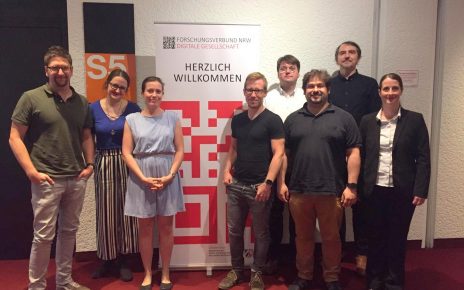
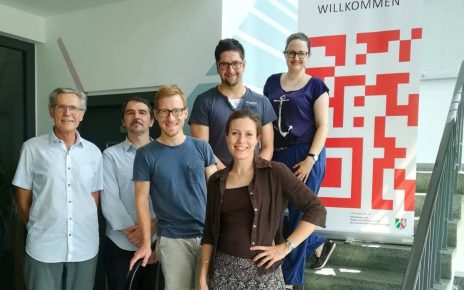
Am 23. September kam das Advisory Board des Forschungsverbundes NRW Digitale Gesellschaft zu einem ersten gemeinsamen Arbeitstreffen in Bonn zusammen.
Der erste Teil des Tages sah ein internes Arbeitstreffen vor, das der Vorstellung des Forschungsverbundes von Seiten der Koordinationsstelle (Prof. Dr. Caja Thimm & Dr. Mario Anastasiadis) diente und den Mitgliedern des Advisory Boards Gelegenheit gab, Struktur und wissenschaftliche Ausrichtung des Verbundes (Projekte, Profil und Qualifikationsprogramm) besser kennenzulernen und zu reflektieren. Es folgte ein konstruktiver Dialog, in dem die Beiratsmitglieder ihre Expertisen und Erfahrungen auf den jeweiligen Forschungs- und Praxisfeldern eingebracht und so zur Weiterentwicklung des Verbundes beigetragen haben. Zentrale Gegenstände des Austausches waren Fragen der Theorie- und Methodenbildung sowie Chancen und Herausforderungen von Interdisziplinarität und Praxistransfer. Zudem gab das Treffen den Anwesenden Gelegenheit zur Besprechung organisatorischer Anliegen, darunter die Wahl eines Sprechers, einer Sprecherin des Advisory Boards, in deren Ausgang Prof. Dr. Andrea Kienle (FH Dortmund) einstimmig gewählt und somit ins Management Board entsandt wurde.
Um darüber hinaus einen direkten Austausch mit Vertreter*innen der Forschungsprojekte zu ermöglichen, wurde der zweite Teil des Treffens am Nachmittag für die Projektbeteiligten geöffnet.
Junior Research Group 1: Demokratische Resilienz in Zeiten von Online-Propaganda, Fake news, Fear- und Hate speech (DemoRESILdigital)
AbstractThe digital society offers new possibilities for democratic participation as well as for disseminating manipulative content. Strategic agents are abusing the easy access to digitally generated publics to spread online propaganda, fake news, fear and hate speech. Such manipulative online content has been assumed to play a crucial role in radicalizing individuals, fostering social polarization, and weakening democracy per se. Even if the empirical evidence partly contradicts such dramatic expectations, the consequences of manipulative online communication should not be underestimated. In consequence, in order to support media recipients in dealing with manipulation attempts via online-media, it is necessary to promote users digital democratic resilience, their individual resistance against manipulative attempts and their ability to make autonomous decisions in virtual communication spheres. However, in order to implement effective tools empowering users and promoting digital democratic resilience, an in-depth understanding of the actors, target groups and impacts of the aforementioned phenomena is needed.
Approach DemoRESILdigital addresses this need. The research team will analyze the actors, dissemination and impact of online propaganda, fake news, fear- and hate speech on different target groups by means of an innovative integration of methods from social sciences, computer science, data science and experimental research on media effects. On this basis, this interdisciplinary junior research group formed by communication scientists and computer scientists will identify and implement suitable intervention and prevention measures to promote democratic resilience.